About Us
Welcome to the RAAZI SCHOOLS!
Discover Our School
We foster critical and creative thinking to help learners approach challenges with confidence. Our programs emphasize collaborative problem solving and meaningful teamwork. A robust, well-structured curriculum supports deep learning and innovation. Lessons are delivered through engaging, student-centered practices. Dedicated educators inspire curiosity, growth, and lifelong learning.

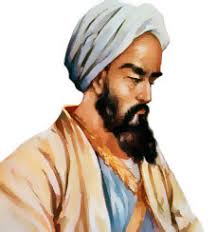
Who was Al Raazi?
Abu Bakr Muhammad Ibn Zakariya Al Razi (Rhazes) - NIH
Known in the West as Al-Raazi or Rhazes, was a renowned Persian physician, philosopher, chemist, and scholar of the Islamic Golden Age, born in 854 CE in Ray, Iran. He is widely regarded as one of the greatest and most original medical minds of medieval Islamic science. Al-Raazi made significant contributions to various fields, especially medicine, where he is credited with being the first to distinguish between smallpox and measles, a breakthrough in clinical diagnosis at the time. His vast medical encyclopedia, Kitab al-Hawi (The Comprehensive Book on Medicine), remained a foundational text in both the Islamic world and Europe for centuries. Another of his well-known works, Kitab al-Mansuri, was used as a standard medical reference in Western universities. Al-Raazi promoted an evidence-based approach to medicine, emphasizing the importance of clinical observation and experimentation over superstition. In chemistry (then called alchemy), he refined techniques such as distillation and crystallization, laying the groundwork for modern chemistry. As a hospital administrator in Ray and Baghdad, he introduced new standards of patient care, ethics, and record-keeping. He also wrote extensively on philosophy and ethics, often advocating for reason, compassion, and a rational worldview.
Al-Raazi’s Contributions to Education:
Al-Raazi’s contributions left a lasting legacy on the fields of medicine, chemistry, and philosophy. His works, later translated into Latin, influenced European scholars and were taught in universities for hundreds of years, making him a bridge between ancient science and modern medical practices. Al-Raazi (Rhazes) was a pioneer of scientific and medical education during the Islamic Golden Age. He promoted evidence-based learning, critical thinking, and ethical scholarship. His medical books, like Kitab al-Hawi, became core texts in both Islamic and European institutions. As head of hospitals in Ray and Baghdad, he introduced clinical training, allowing students to learn through observation. Al Raazi championed interdisciplinary education, blending science, philosophy, and ethics, and emphasized moral integrity in learning. His holistic and rational approach laid the foundation for modern educational principles.
Mission Statement
“Raazi Schools is committed to providing an exceptional, values-driven education that nurtures intellectual curiosity, moral integrity, and innovative thinking. Grounded in Islamic principles and inspired by the scholarly tradition of Al-Razi, we empower students to excel academically, think critically, and contribute compassionately to society. Through a dynamic curriculum, ethical leadership development, and a culture of lifelong learning, we prepare future generations to meet…”
OUR VISION
“Inspired by the intellectual curiosity and humanitarian legacy of Al-Razi, Raazi Schools aspires to cultivate a generation of critical thinkers, ethical leaders, and lifelong learners. We strive to integrate excellence in science, arts, and moral wisdom, fostering innovation with integrity. Grounded in Islamic values and global citizenship, our vision is to empower students to seek knowledge, serve humanity, and contribute meaningfully to a just and progressive world.”